Uruguay Population: 3,369,299
«  Previous Country | Next Country Previous Country | Next Country  » » | 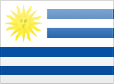 |
| History | |
| Montevideo, founded by the Spanish in 1726 as a military stronghold, soon took advantage of its natural harbor to become an important commercial center. Claimed by Argentina but annexed by Brazil in 1821, Uruguay declared its independence four years later and secured its freedom in 1828 after a three-year struggle. The administrations of President Jose BATLLE in the early 20th century launched widespread political, social, and economic reforms that established a statist tradition. A violent Marxist urban guerrilla movement named the Tupamaros, launched in the late 1960s, led Uruguay's president to cede control of the government to the military in 1973. By yearend, the rebels had been crushed, but the military continued to expand its hold over the government. Civilian rule was restored in 1985. In 2004, the left-of-center Frente Amplio Coalition won national elections that effectively ended 170 years of political control previously held by the Colorado and National (Blanco) parties. Uruguay's political and labor conditions are among the freest on the continent. |
 |
| |
| Geography | |
| |
| Location: | Southern South America, bordering the South Atlantic Ocean, between Argentina and Brazil |
| Geographic coordinates: | 33 00 S, 56 00 W |
| Area: | total: 176,215 sq km land: 175,015 sq km water: 1,200 sq km Size comparison: about the size of Virginia and West Virginia combined; slightly smaller than the state of Washington |
| Land Boundaries: | total: 1,591 km border countries (2): Argentina 541 km, Brazil 1050 km |
| Coastline: | 660 km |
| Maritime claims: | territorial sea: 12 nm exclusive economic zone: 200 nm contiguous zone: 24 nm continental shelf: 200 nm or the edge of continental margin |
| Climate: | warm temperate; freezing temperatures almost unknown |
| Terrain: | mostly rolling plains and low hills; fertile coastal lowland |
| Natural resources: | arable land, hydropower, minor minerals, fish |
| Land use: | agricultural land: 87.2% (2011 est.) arable land: 10.1% (2011 est.) permanent crops: 0.2% (2011 est.) permanent pasture: 76.9% (2011 est.) forest: 10.2% (2011 est.) other: 2.6% (2011 est.) |
| Irrigated land: | 2,380 sq km (2012) |
| Natural hazards: | seasonally high winds (the pampero is a chilly and occasional violent wind that blows north from the Argentine pampas), droughts, floods; because of the absence of mountains, which act as weather barriers, all locations are particularly vulnerable to rapid changes from weather fronts |
| Current Environment Issues: | water pollution from meat packing/tannery industry; heavy metal pollution; inadequate solid/hazardous waste disposal; deforestation |
| International Environment Agreements: | party to: Antarctic-Environmental Protocol, Antarctic-Marine Living Resources, Antarctic Treaty, Biodiversity, Climate Change, Climate Change-Kyoto Protocol, Desertification, Endangered Species, Environmental Modification, Hazardous Wastes, Law of the Sea, Ozone Layer Protection, Ship Pollution, Wetlands signed, but not ratified: Marine Dumping, Marine Life Conservation |
| ^Back to Top | |
| People | |
| |
| Nationality: | noun: Uruguayan(s) adjective: Uruguayan |
| Ethnic groups: | white 87.7%, black 4.6%, indigenous 2.4%, other 0.3%, none or unspecified 5% (2011 est.) note: data represent primary ethnic identity |
| Languages: | Spanish (official) |
| Religions: | Roman Catholic 47.1%, non-Catholic Christians 11.1%, nondenominational 23.2%, Jewish 0.3%, atheist or agnostic 17.2%, other 1.1% (2006 est.) |
| Population: | 3,369,299 (July 2018 est.) |
| Age structure: | 0-14 years: 19.91% (male 341,402 /female 329,474) 15-24 years: 15.56% (male 265,486 /female 258,611) 25-54 years: 39.48% (male 658,871 /female 671,172) 55-64 years: 10.68% (male 169,385 /female 190,392) 65 years and over: 14.38% (male 194,269 /female 290,237) (2018 est.) |
| Dependency ratios: | total dependency ratio: 55.9 (2015 est.) youth dependency ratio: 33.4 (2015 est.) elderly dependency ratio: 22.5 (2015 est.) potential support ratio: 4.4 (2015 est.) |
| Median age: | total: 35.1 years male: 33.3 years female: 36.9 years (2018 est.) |
| Population growth rate: | 0.27% (2018 est.) |
| Birth rate: | 13 births/1,000 population (2018 est.) |
| Death rate: | 9.4 deaths/1,000 population (2018 est.) |
| Net migration rate: | -0.9 migrant(s)/1,000 population (2018 est.) |
| Urbanization: | urban population: 95.3% of total population (2018) rate of urbanization: 0.46% annual rate of change (2015-20 est.) |
| Major urban areas - population: | 1.737 million MONTEVIDEO (capital) (2018) |
| Sex ratio: | at birth: 1.04 male(s)/female 0-14 years: 1.04 male(s)/female 15-24 years: 1.03 male(s)/female 25-54 years: 0.98 male(s)/female 55-64 years: 0.89 male(s)/female 65 years and over: 0.67 male(s)/female total population: 0.94 male(s)/female (2018 est.) |
| Maternal mortality rate: | 15 deaths/100,000 live births (2015 est.) |
| Infant mortality rate: | total: 8.1 deaths/1,000 live births male: 9 deaths/1,000 live births female: 7.2 deaths/1,000 live births (2018 est.) |
| Life expectancy at birth: | total population: 77.6 years male: 74.4 years female: 80.8 years (2018 est.) |
| Total fertility rate: | 1.79 children born/woman (2018 est.) |
| Contraceptive prevalence rate: | 79.6% (2015) note: percent of women aged 15-44 |
| Physicians density: | 5.05 physicians/1,000 population (2017) |
| Hospital bed density: | 2.8 beds/1,000 population (2014) |
| Drinking water source: | improved: urban: 100% of population rural: 93.9% of population total: 99.7% of population unimproved: urban: 0% of population rural: 6.1% of population total: 0.3% of population (2015 est.) |
| Sanitation facility access: | improved: urban: 96.6% of population (2015 est.) rural: 92.6% of population (2015 est.) total: 96.4% of population (2015 est.) unimproved: urban: 3.4% of population (2015 est.) rural: 7.4% of population (2015 est.) total: 3.6% of population (2015 est.) |
| HIV/AIDS - adult prevalence rate: | 0.6% (2017 est.) |
| HIV/AIDS - people living with HIV/AIDS: | 13,000 (2017 est.) |
| HIV/AIDS - deaths: | <500 (2017 est.) |
| Obesity - adult prevalence rate: | 27.9% (2016) |
| Children under the age of 5 years underweight: | 4% (2011) |
| Education expenditures: | 4.4% of GDP (2011) |
| Literacy: | definition: age 15 and over can read and write (2017 est.) total population: 98.6% male: 98.2% female: 99% (2017 est.) |
| School life expectancy (primary to tertiary education): | 16 years Unemployment, youth ages 15-24: total: 24.8% male: 20.7% female: 30.4% (2017 est.) |
| ^Back to Top | |
| Government | |
| |
| Country name: | conventional long form: Oriental Republic of Uruguay conventional short form: Uruguay local long form: Republica Oriental del Uruguay local short form: Uruguay former: Banda Oriental, Cisplatine Province etymology: name derives from the Spanish pronunciation of the Guarani Indian designation of the Uruguay River, which makes up the western border of the country and whose name later came to be applied to the entire country |
| Government type: | presidential republic |
| Capital: | name: Montevideo geographic coordinates: 34 51 S, 56 10 W time difference: UTC-3 (2 hours ahead of Washington, DC, during Standard Time) |
| Administrative divisions: | 19 departments (departamentos, singular - departamento); Artigas, Canelones, Cerro Largo, Colonia, Durazno, Flores, Florida, Lavalleja, Maldonado, Montevideo, Paysandu, Rio Negro, Rivera, Rocha, Salto, San Jose, Soriano, Tacuarembo, Treinta y Tres |
| Independence: | 25 August 1825 (from Brazil) |
| National holiday: | Independence Day, 25 August (1825) |
| Constitution: | history: several previous; latest approved by plebiscite 27 November 1966, effective 15 February 1967 amendments: initiated by public petition of at least 10% of qualified voters, proposed by agreement of at least two-fifths of the General Assembly membership, or by existing "constitutional laws" sanctioned by at least two-thirds of the membership in both houses of the Assembly; proposals can also be submitted by senators, representatives, or by the executive power and require the formation of and approval in a national constituent convention; final passage by either method requires approval by absolute majority of votes cast in a referendum; amended many times, last in 2004 (2018) |
| Legal system: | civil law system based on the Spanish civil code |
| Suffrage: | 18 years of age; universal and compulsory |
| Executive branch: | chief of state: President Tabare VAZQUEZ (since 1 March 2015); Vice President Lucia TOPOLANSKY (since 13 September 2017); note - Vice President Raul Fernando SENDIC Rodriguez (since 1 March 2015) stepped down on 9 September 2017 amid accusations of misuse of public funds; the president is both chief of state and head of government head of government: President Tabare VAZQUEZ (since 1 March 2015); Vice President Lucia TOPOLANSKY (since 13 September 2017) cabinet: Council of Ministers appointed by the president with approval of the General Assembly elections/appointments: president and vice president directly elected on the same ballot by absolute majority vote in 2 rounds if needed for a 5-year term (eligible for nonconsecutive terms); election last held on 26 October 2014 with a runoff election on 30 November 2014 (next to be held on 27 October 2019, and a runoff if needed on 24 November 2019) election results: Tabare VAZQUEZ elected president in second round; percent of vote - Tabare VAZQUEZ (Socialist Party) 56.5%, Luis Alberto LACALLE Pou (Blanco) 43.4% |
| Legislative branch: | description: bicameral General Assembly or Asamblea General consists of: Chamber of Senators or Camara de Senadores (31 seats; members directly elected in a single nationwide constituency by proportional representation vote; the vice-president serves as the presiding ex-officio member; elected members serve 5-year terms) Chamber of Representatives or Camara de Representantes (99 seats; members directly elected in multi-seat constituencies by proportional representation vote to serve 5-year terms) elections: Chamber of Senators - last held on 26 October 2014 (next to be held in October 2019); Chamber of Representatives - last held on 26 October 2014 (next to be held in October 2019) election results: Chamber of Senators - percent of vote by coalition/party - Frente Amplio 49.5%, National Party 31.9%, Colorado Party 13.3%, Independent Party 3.2%, other 2.1%; seats by coalition/party - Frente Amplio 15, National Party 10, Colorado Party 4, Independent Party 1; composition -men 22, women 9, percent of women 29% Chamber of Representatives - percent of vote by coalition/party - Frente Amplio 49.5%, National Party 31.9%, Colorado Party 13.3%, Independent Party 3.2%, AP 1.2%, other 0.9%; seats by coalition/party - Frente Amplio 50, National Party 32, Colorado Party 13, Independent Party 3, AP 1; composition - men 83, women 16, percent of women 16.2%; note - total General Assembly percent of women 19.2% |
| Judicial branch: | highest courts: Supreme Court of Justice (consists of 5 judges) judge selection and term of office: judges nominated by the president and appointed in joint conference of the General Assembly; judges serve 10-year terms, with reelection possible after a lapse of 5 years following the previous term subordinate courts: Courts of Appeal; District Courts (Juzgados Letrados); Peace Courts (Juzgados de Paz); Rural Courts (Juzgados Rurales) |
| Political parties and leaders: | Broad Front or FA (Frente Amplio) [Javier MIRANDA] - (a broad governing coalition that includes Uruguay Assembly [Danilo ASTORI], Progressive Alliance [Rodolfo NIN NOVOA], New Space [Rafael MICHELINI], Socialist Party [Monica XAVIER], Vertiente Artiguista [Enrique RUBIO], Christian Democratic Party [Jorge RODRIGUEZ], For the People’s Victory [Luis PUIG], Popular Participation Movement (MPP) [Jose MUJICA], Broad Front Commitment [Raul SENDIC], Big House [Constanza MOREIRA], Communist Party [Marcos CARAMBULA], The Federal League [Dario PEREZ] Colorado Party (including Vamos Uruguay (or Let's Go Uruguay), Open Space [Tabare VIERA], and Open Batllism [Ope PASQUET]) Independent Party [Pablo MIERES] National Party or Blanco (including Everyone [Luis LACALLE POU] and National Alliance [Jorge LARRANAGA]) Popular Unity [Gonzalo ABELLA] |
| International organization participation: | CAN (associate), CD, CELAC, FAO, G-77, IADB, IAEA, IBRD, ICAO, ICC (national committees), ICCt, ICRM, IDA, IFAD, IFC, IFRCS, IHO, ILO, IMF, IMO, Interpol, IOC, IOM, IPU, ISO, ITSO, ITU, LAES, LAIA, Mercosur, MIGA, MINUSTAH, MONUSCO, NAM (observer), OAS, OIF (observer), OPANAL, OPCW, Pacific Alliance (observer), PCA, SICA (observer), UN, UNASUR, UNCTAD, UNESCO, UNIDO, Union Latina, UNMOGIP, UNOCI, UNWTO, UPU, WCO, WFTU (NGOs), WHO, WIPO, WMO, WTO |
| National symbol(s): | Sun of May (a sun-with-face symbol); national colors: blue, white, yellow |
| National anthem: | name: "Himno Nacional" (National Anthem of Uruguay) lyrics/music: Francisco Esteban ACUNA de Figueroa/Francisco Jose DEBALI note: adopted 1848; the anthem is also known as "Orientales, la Patria o la tumba!" ("Uruguayans, the Fatherland or Death!"); it is the world's longest national anthem in terms of music (105 bars; almost five minutes); generally only the first verse and chorus are sung |
| Diplomatic representation in the US: | chief of mission: Ambassador Carlos Alberto GIANELLI Derois (since 3 August 2015) chancery: 1913 I Street NW, Washington, DC 20006 telephone: [1] (202) 331-1313 FAX: [1] (202) 331-8142 consulate(s) general: Chicago, Los Angeles, Miami, New York |
| Diplomatic representation from the US: | chief of mission: Ambassador Kelly Ann KEIDERLING-FRANZ (since 23 June 2016) embassy: Lauro Muller 1776, Montevideo 11200 mailing address: APO AA 34035 telephone: [598] (2) 1770-2000 FAX: [598] (2) 1770-2128 |
| ^Back to Top | |
| Economy | |
Uruguay has a free market economy characterized by an export-oriented agricultural sector, a well-educated workforce, and high levels of social spending. Uruguay has sought to expand trade within the Common Market of the South (Mercosur) and with non-Mercosur members, and President VAZQUEZ has maintained his predecessor's mix of pro-market policies and a strong social safety net. Following financial difficulties in the late 1990s and early 2000s, Uruguay's economic growth averaged 8% annually during the 2004-08 period. The 2008-09 global financial crisis put a brake on Uruguay's vigorous growth, which decelerated to 2.6% in 2009. Nevertheless, the country avoided a recession and kept growth rates positive, mainly through higher public expenditure and investment; GDP growth reached 8.9% in 2010 but slowed markedly in the 2012-16 period as a result of a renewed slowdown in the global economy and in Uruguay's main trade partners and Mercosur counterparts, Argentina and Brazil. Reforms in those countries should give Uruguay an economic boost. Growth picked up in 2017. | |
| GDP (purchasing power parity): | $78.16 billion (2017 est.) $76.14 billion (2016 est.) $74.87 billion (2015 est.) note: data are in 2017 dollars |
| GDP (official exchange rate): | $59.18 billion (2017 est.) |
| GDP - real growth rate: | 2.7% (2017 est.) 1.7% (2016 est.) 0.4% (2015 est.) |
| GDP - per capita (PPP): | $22,400 (2017 est.) $21,900 (2016 est.) $21,600 (2015 est.) note: data are in 2017 dollars |
| Gross national saving: | 17.2% of GDP (2017 est.) 18.6% of GDP (2016 est.) 18.7% of GDP (2015 est.) GDP - composition, by end use: household consumption: 66.8% (2017 est.) government consumption: 14.3% (2017 est.) investment in fixed capital: 16.7% (2017 est.) investment in inventories: -1% (2017 est.) exports of goods and services: 21.6% (2017 est.) imports of goods and services: -18.4% (2017 est.) GDP - composition, by sector of origin: agriculture: 6.2% (2017 est.) industry: 24.1% (2017 est.) services: 69.7% (2017 est.) |
| Agriculture - products: | Cellulose, beef, soybeans, rice, wheat; dairy products; fish; lumber, tobacco, wine |
| Industries: | food processing, electrical machinery, transportation equipment, petroleum products, textiles, chemicals, beverages |
| Industrial production growth rate: | -3.6% (2017 est.) |
| Labor force: | 1.748 million (2017 est.) |
| Labor force - by occupation: | agriculture: 13% industry: 14% services: 73% (2010 est.) |
| Unemployment rate: | 7.6% (2017 est.) 7.9% (2016 est.) |
| Population below poverty line: | 9.7% (2015 est.) |
| Household income or consumption by percentage share: | lowest 10%: 1.9% highest 10%: 30.8% (2014 est.) |
| Distribution of family income - Gini index: | 41.6 (2014) 41.9 (2013) |
| Budget: | revenues: 17.66 billion (2017 est.) expenditures: 19.72 billion (2017 est.) |
| Taxes and other revenues: | 29.8% (of GDP) (2017 est.) Budget surplus (+) or deficit (-): -3.5% (of GDP) (2017 est.) |
| Public debt: | 65.7% of GDP (2017 est.) 61.6% of GDP (2016 est.) note: data cover general government debt and include debt instruments issued (or owned) by government entities other than the treasury; the data include treasury debt held by foreign entities; the data include debt issued by subnational entities, as well as intragovernmental debt; intragovernmental debt consists of treasury borrowings from surpluses in the social funds, such as for retirement, medical care, and unemployment; debt instruments for the social funds are not sold at public auctions. |
| Fiscal year: | calendar year |
| Inflation rate (consumer prices): | 6.2% (2017 est.) 9.6% (2016 est.) |
| Current account balance: | $879 million (2017 est.) $410 million (2016 est.) |
| Exports: | $11.41 billion (2017 est.) $8.387 billion (2016 est.) |
| Exports - commodities: | beef, soybeans, cellulose, rice, wheat, wood, dairy products, wool |
| Exports - partners: | China 19%, Brazil 16.1%, US 5.7%, Argentina 5.4% (2017) |
| Imports: | $8.607 billion (2017 est.) $8.463 billion (2016 est.) |
| Imports - commodities: | refined oil, crude oil, passenger and other transportation vehicles, vehicle parts, cellular phones |
| Imports - partners: | China 20%, Brazil 19.5%, Argentina 12.6%, US 10.9% (2017) |
| Reserves of foreign exchange and gold: | $15.96 billion (31 December 2017 est.) $13.47 billion (31 December 2016 est.) |
| Debt - external: | $28.37 billion (31 December 2017 est.) $27.9 billion (31 December 2016 est.) |
| Stock of direct foreign investment - at home: | $44.84 billion (31 December 2017 est.) $22.81 billion (31 December 2016 est.) |
| Stock of direct foreign investment - abroad: | $19.97 billion (31 December 2017 est.) $136.1 million (31 December 2016 est.) |
| Market value of publicly traded shares: | $175.4 million (31 December 2012 est.) $174.6 million (31 December 2011 est.) $156.9 million (31 December 2010 est.) |
| Exchange rates: | Uruguayan pesos (UYU) per US dollar - 28.77 (2017 est.) 30.16 (2016 est.) 30.16 (2015 est.) 27.52 (2014 est.) 23.25 (2013 est.) |
| ^Back to Top | |
| Energy | |
| |
| Electricity - production: | 13.13 billion kWh (2016 est.) |
| Electricity - consumption: | 10.77 billion kWh (2016 est.) |
| Electricity - exports: | 1.321 billion kWh (2015 est.) |
| Electricity - imports: | 24 million kWh (2016 est.) |
| Electricity - installed generating capacity: | 4.808 million kW (2016 est.) |
| Electricity - from fossil fuels: | 29% of total installed capacity (2016 est.) |
| Electricity - from nuclear fuels: | 0% of total installed capacity (2017 est.) |
| Electricity - from hydroelectric plants: | 29% of total installed capacity (2017 est.) |
| Electricity - from other renewable sources: | 42% of total installed capacity (2017 est.) |
| Crude oil - production: | 0 bbl/day (2017 est.) |
| Crude oil - exports: | 0 bbl/day (2015 est.) |
| Crude oil - imports: | 40,200 bbl/day (2015 est.) |
| Crude oil - proved reserves: | 0 bbl (1 January 2018 est.) |
| Refined petroleum products - production: | 42,220 bbl/day (2015 est.) |
| Refined petroleum products - consumption: | 53,000 bbl/day (2016 est.) |
| Refined petroleum products - exports: | 0 bbl/day (2015 est.) |
| Refined petroleum products - imports: | 9,591 bbl/day (2015 est.) |
| Natural gas - production: | 0 cu m (2017 est.) |
| Natural gas - consumption: | 70.79 million cu m (2017 est.) |
| Natural gas - exports: | 0 cu m (2017 est.) |
| Natural gas - imports: | 70.79 million cu m (2017 est.) |
| Natural gas - proved reserves: | 0 cu m (1 January 2014 est.) |
| Carbon dioxide emissions from consumption of energy: | 7.554 million Mt (2017 est.) |
| ^Back to Top | |
| Communications | |
| |
| Cellular Phones in use: | total subscriptions: 5,097,569 subscriptions per 100 inhabitants: 152 (2017 est.) |
| Telephone system: | general assessment: fully digitalized; one of the highest broadband penetrations in Latin America; high fixed-line and mobile penetrations as well; FttP coverage by 2022; nationwide 3G coverage (2018) domestic: most modern facilities concentrated in Montevideo; nationwide microwave radio relay network; overall fixed-line 34 per 100 and mobile-cellular teledensity 152 per 100 persons (2018) international: country code - 598; the UNISOR submarine cable system provides direct connectivity to Brazil and Argentina; satellite earth stations - 2 Intelsat (Atlantic Ocean); Bicentenario 2012 and Tannat 2017 cables helped end-users with Internet bandwidth |
| Broadcast media: | mixture of privately owned and state-run broadcast media; more than 100 commercial radio stations and about 20 TV channels; cable TV is available; many community radio and TV stations; adopted the hybrid Japanese/Brazilian HDTV standard (ISDB-T) in December 2010 (2019) |
| Internet country code: | .uy |
| Internet users: | total: 2,225,075 percent of population: 66.4% (July 2016 est.) |
| ^Back to Top | |
| Transportation | |
| |
| Airports: | 133 (2013) |
| Airports (paved runways): | total 11 (2013) over 3,047 m: 1 (2013) 1,524 to 2,437 m: 4 (2013) 914 to 1,523 m: 4 (2013) under 914 m: 2 (2013) |
| Airports (unpaved runways): | total 122 (2013) 1,524 to 2,437 m: 3 (2013) 914 to 1,523 m: 40 (2013) under 914 m: 79 (2013) |
| Pipelines: | 257 km gas, 160 km oil (2013) |
| Railways: | total 1,673 km (operational; government claims overall length is 2,961 km) (2016) standard gauge: 1,673 km 1.435-m gauge (2016) |
| Roadways: | total 77,732 km (2010) paved: 7,743 km (2010) unpaved: 69,989 km (2010) |
| Waterways: | 1,600 km (2011) |
| Merchant marine: | total 57 by type: container ship 1, general cargo 6, oil tanker 3, other 47 (2018) |
| Ports and terminals: | major seaport(s): Montevideo |
| ^Back to Top | |
| Military | |
| |
| Military branches: | Uruguayan Armed Forces: Uruguayan National Army (Ejercito Nacional Uruguaya, ENU), Uruguayan National Navy (Armada Nacional del Uruguay, includes naval air arm, Naval Rifle Corps (Cuerpo de Fusileros Navales, Fusna), Maritime Prefecture in wartime), Uruguayan Air Force (Fuerza Aerea Uruguaya, FAU) (2012) |
| Military service age and obligation: | 18-30 years of age (18-22 years of age for navy) for male or female voluntary military service; up to 40 years of age for specialists; enlistment is voluntary in peacetime, but the government has the authority to conscript in emergencies; minimum 6-year education (2013) |
| Military expenditures: | 1.85% of GDP (2016) 1.82% of GDP (2015) 1.81% of GDP (2014) 1.82% of GDP (2013) 1.8% of GDP (2012) |
| ^Back to Top | |
| Transnational Issues | |
| |
| Disputes - International: | in 2010, the ICJ ruled in favor of Uruguay's operation of two paper mills on the Uruguay River, which forms the border with Argentina; the two countries formed a joint pollution monitoring regime; uncontested boundary dispute between Brazil and Uruguay over Braziliera/Brasiliera Island in the Quarai/Cuareim River leaves the tripoint with Argentina in question; smuggling of firearms and narcotics continues to be an issue along the Uruguay-Brazil border |
| Refugees and internally displaced persons: | refugees (country of origin): 13,097 (Venezuela) (economic and political crisis; includes Venezuelans who have claimed asylum or have received alternative legal stay) (2019) |
| Illicit drugs: | small-scale transit country for drugs mainly bound for Europe, often through sea-borne containers; law enforcement corruption; money laundering because of strict banking secrecy laws; weak border control along Brazilian frontier; increasing consumption of cocaine base and synthetic drugs |
| ^Back to Top | |
«
Previous Country | Next Country »
Source: CIA - The World Factbook