Sao Tome and Principe Population: 204,454
«  Previous Country | Next Country Previous Country | Next Country  » » | 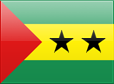 |
| History | |
| Discovered and claimed by Portugal in the late 15th century, the islands' sugar-based economy gave way to coffee and cocoa in the 19th century - all grown with African plantation slave labor, a form of which lingered into the 20th century. While independence was achieved in 1975, democratic reforms were not instituted until the late 1980s. The country held its first free elections in 1991, but frequent internal wrangling between the various political parties precipitated repeated changes in leadership and four failed, non-violent coup attempts in 1995, 1998, 2003, and 2009. In 2012, three opposition parties combined in a no confidence vote to bring down the majority government of former Prime Minister Patrice TROVOADA, but in 2014, legislative elections returned him to the office. President Evaristo CARVALHO, of the same political party as Prime Minister TROVOADA, was elected in September 2016, marking a rare instance in which the positions of president and prime minister are held by the same party. Prime Minister TROVOADA resigned at the end of 2018 and was replaced by Jorge BOM JESUS. New oil discoveries in the Gulf of Guinea may attract increased attention to the small island nation. |
 |
| |
| Geography | |
| |
| Location: | Central Africa, islands in the Gulf of Guinea, just north of the Equator, west of Gabon |
| Geographic coordinates: | 1 00 N, 7 00 E |
| Area: | total: 964 sq km land: 964 sq km water: 0 sq km Size comparison: more than five times the size of Washington, DC |
| Land Boundaries: | 0 km |
| Coastline: | 209 km |
| Maritime claims: | territorial sea: 12 nm exclusive economic zone: 200 nm measured from claimed archipelagic baselines |
| Climate: | tropical; hot, humid; one rainy season (October to May) |
| Terrain: | volcanic, mountainous |
| Natural resources: | fish, hydropower |
| Land use: | agricultural land: 50.7% (2011 est.) arable land: 9.1% (2011 est.) permanent crops: 40.6% (2011 est.) permanent pasture: 1% (2011 est.) forest: 28.1% (2011 est.) other: 21.2% (2011 est.) |
| Irrigated land: | 100 sq km (2012) |
| Natural hazards: | flooding |
| Current Environment Issues: | deforestation and illegal logging; soil erosion and exhaustion; inadequate sewage treatment in cities; biodiversity preservation |
| International Environment Agreements: | party to: Biodiversity, Climate Change, Climate Change-Kyoto Protocol, Desertification, Endangered Species, Environmental Modification, Hazardous Wastes, Law of the Sea, Ozone Layer Protection, Ship Pollution, Wetlands signed, but not ratified: none of the selected agreements |
| ^Back to Top | |
| People | |
| |
| Nationality: | noun: Sao Tomean(s) adjective: Sao Tomean |
| Ethnic groups: | mestico, angolares (descendants of Angolan slaves), forros (descendants of freed slaves), servicais (contract laborers from Angola, Mozambique, and Cabo Verde), tongas (children of servicais born on the islands), Europeans (primarily Portuguese), Asians (mostly Chinese) |
| Languages: | Portuguese 98.4% (official), Forro 36.2%, Cabo Verdian 8.5%, French 6.8%, Angolar 6.6%, English 4.9%, Lunguie 1%, other (including sign language) 2.4% (2012 est.) note: shares sum to more than 100% because some respondents gave more than one answer on the census |
| Religions: | Catholic 55.7%, Adventist 4.1%, Assembly of God 3.4%, New Apostolic 2.9%, Mana 2.3%, Universal Kingdom of God 2%, Jehovah's Witness 1.2%, other 6.2%, none 21.2%, unspecified 1% (2012 est.) |
| Population: | 204,454 (July 2018 est.) |
| Age structure: | 0-14 years: 41.2% (male 42,825 /female 41,403) 15-24 years: 21.01% (male 21,767 /female 21,188) 25-54 years: 31.03% (male 31,218 /female 32,229) 55-64 years: 3.93% (male 3,708 /female 4,332) 65 years and over: 2.83% (male 2,545 /female 3,239) (2018 est.) |
| Dependency ratios: | total dependency ratio: 86.7 (2015 est.) youth dependency ratio: 81.1 (2015 est.) elderly dependency ratio: 5.6 (2015 est.) potential support ratio: 17.8 (2015 est.) |
| Median age: | total: 18.7 years male: 18.3 years female: 19.1 years (2018 est.) |
| Population growth rate: | 1.66% (2018 est.) |
| Birth rate: | 31.5 births/1,000 population (2018 est.) |
| Death rate: | 6.7 deaths/1,000 population (2018 est.) |
| Net migration rate: | -8.2 migrant(s)/1,000 population (2018 est.) |
| Urbanization: | urban population: 72.8% of total population (2018) rate of urbanization: 3.33% annual rate of change (2015-20 est.) |
| Major urban areas - population: | 80,000 SAO TOME (capital) (2018) |
| Sex ratio: | at birth: 1.03 male(s)/female 0-14 years: 1.03 male(s)/female 15-24 years: 1.03 male(s)/female 25-54 years: 0.97 male(s)/female 55-64 years: 0.86 male(s)/female 65 years and over: 0.79 male(s)/female total population: 1 male(s)/female (2018 est.) Mother's mean age at first birth: 19.4 years (2008/09 est.) note: median age at first birth among women 25-29 |
| Maternal mortality rate: | 156 deaths/100,000 live births (2015 est.) |
| Infant mortality rate: | total: 44.1 deaths/1,000 live births male: 46 deaths/1,000 live births female: 42.1 deaths/1,000 live births (2018 est.) |
| Life expectancy at birth: | total population: 65.7 years male: 64.3 years female: 67.1 years (2018 est.) |
| Total fertility rate: | 4.11 children born/woman (2018 est.) |
| Contraceptive prevalence rate: | 40.6% (2014) |
| Hospital bed density: | 2.9 beds/1,000 population (2011) |
| Drinking water source: | improved: urban: 98.9% of population rural: 93.6% of population total: 97.1% of population unimproved: urban: 1.1% of population rural: 6.4% of population total: 2.9% of population (2015 est.) |
| Sanitation facility access: | improved: urban: 40.8% of population (2015 est.) rural: 23.3% of population (2015 est.) total: 34.7% of population (2015 est.) unimproved: urban: 59.2% of population (2015 est.) rural: 76.7% of population (2015 est.) total: 65.3% of population (2015 est.) |
| HIV/AIDS - adult prevalence rate: | n/a |
| HIV/AIDS - people living with HIV/AIDS: | n/a |
| HIV/AIDS - deaths: | n/a |
| Obesity - adult prevalence rate: | 12.4% (2016) |
| Children under the age of 5 years underweight: | 8.8% (2014) |
| Education expenditures: | 4.9% of GDP (2017) |
| Literacy: | definition: age 15 and over can read and write (2015 est.) total population: 74.9% male: 81.8% female: 68.4% (2015 est.) |
| School life expectancy (primary to tertiary education): | total: 12 years male: 12 years female: 13 years (2015) Unemployment, youth ages 15-24: total: 20.8% male: n/a female: n/a (2012 est.) |
| ^Back to Top | |
| Government | |
| |
| Country name: | conventional long form: Democratic Republic of Sao Tome and Principe conventional short form: Sao Tome and Principe local long form: Republica Democratica de Sao Tome e Principe local short form: Sao Tome e Principe etymology: Sao Tome was named after Saint THOMAS the Apostle by the Portuguese who discovered the island on 21 December 1470 (or 1471), the saint's feast day; Principe is a shortening of the original Portuguese name of "Ilha do Principe" (Isle of the Prince) referring to the Prince of Portugal to whom duties on the island's sugar crop were paid |
| Government type: | semi-presidential republic |
| Capital: | name: Sao Tome geographic coordinates: 0 20 N, 6 44 E time difference: UTC 0 (5 hours ahead of Washington, DC, during Standard Time) etymology: named after Saint Thomas the Apostle |
| Administrative divisions: | 6 districts (distritos, singular - distrito), 1 autonomous region* (regiao autonoma); Agua Grande, Cantagalo, Caue, Lemba, Lobata, Me-Zochi, Principe* |
| Independence: | 12 July 1975 (from Portugal) |
| National holiday: | Independence Day, 12 July (1975) |
| Constitution: | history: approved 5 November 1975 amendments: proposed by the National Assembly; passage requires two-thirds majority vote by the Assembly; the Assembly can propose to the president of the republic that an amendment be submitted to a referendum; revised several times, last in 2006 (2017) |
| Legal system: | mixed legal system of civil law based on the Portuguese model and customary law |
| Suffrage: | 18 years of age; universal |
| Executive branch: | chief of state: President Evaristo CARVALHO (since 3 September 2016) head of government: Prime Minister Jorge Bom JESUS (since 3 December 2018) cabinet: Council of Ministers proposed by the prime minister, appointed by the president elections/appointments: president directly elected by absolute majority popular vote in 2 rounds if needed for a 5-year term (eligible for a second term); election last held on 7 July 2016 and 7 August 2016 (next to be held in July 2021); prime minister chosen by the National Assembly and approved by the president election results: Evaristo CARVALHO elected president; percent of vote - Evaristo CARVALHO (ADI) 49.8%, Manuel Pinto DA COSTA (independent) 24.8%, Maria DAS NEVES (MLSTP-PSD) 24.1%; note - first round results for CARVALHO were revised downward from just over 50%, prompting the 7 August runoff; however, on 1 August 2016 DA COSTA withdrew from the runoff, citing voting irregularities, and CARVALHO was declared the winner |
| Legislative branch: | description: unicameral National Assembly or Assembleia Nacional (55 seats; members directly elected in multi-seat constituencies by closed party-list proportional representation vote to serve 4-year terms) elections: last held on 7 October 2018 (next to be held in October 2022) election results: percent of vote by party - ADI 41.8%, MLSTP/PSD 40.3%, PCD-GR 9.5%, MCISTP 2.1%, other 6.3%; seats by party - ADI 25, MLSTP-PSD 23, PCD-MDFM-UDD 5, MCISTP 2; composition - men 45, women 10, percent of women 18.2% |
| Judicial branch: | highest courts: Supreme Court or Supremo Tribunal Justica (consists of 5 judges); Constitutional Court or Tribunal Constitucional (consists of 5 judges, 3 of whom are from the Supreme Court) judge selection and term of office: Supreme Court judges appointed by the National Assembly; judge tenure NA; Constitutional Court judges nominated by the president and elected by the National Assembly for 5-year terms subordinate courts: Court of First Instance; Audit Court |
| Political parties and leaders: | Force for Democratic Change Movement or MDFM [Fradique Bandeira Melo DE MENEZES] Independent Democratic Action or ADI [vacant] Movement for the Liberation of Sao Tome and Principe-Social Democratic Party or MLSTP-PSD [Aurelio MARTINS] Party for Democratic Convergence-Reflection Group or PCD-GR [Leonel Mario D'ALVA] other small parties |
| International organization participation: | ACP, AfDB, AOSIS, AU, CD, CEMAC, CPLP, EITI (candidate country), FAO, G-77, IBRD, ICAO, ICRM, IDA, IFAD, IFC, IFRCS, ILO, IMF, IMO, Interpol, IOC, IOM (observer), IPU, ITU, ITUC (NGOs), MIGA, NAM, OIF, OPCW, PCA, UN, UNCTAD, UNESCO, UNIDO, Union Latina, UNWTO, UPU, WCO, WHO, WIPO, WMO, WTO (observer) |
| National symbol(s): | palm tree; national colors: green, yellow, red, black |
| National anthem: | name: "Independencia total" (Total Independence) lyrics/music: Alda Neves DA GRACA do Espirito Santo/Manuel dos Santos Barreto de Sousa e ALMEIDA note: adopted 1975 |
| Diplomatic representation in the US: | chief of mission: Ambassador Carlos Filomeno Azevedo Agostinho das NEVES (since 3 December 2013) chancery: 675 Third Avenue, Suite 1807, New York, NY 10017 telephone: [1] (212) 651-8116 FAX: [1] (212) 651-8117 |
| Diplomatic representation from the US: | the US does not have an embassy in Sao Tome and Principe; the US Ambassador to Gabon is accredited to Sao Tome and Principe on a nonresident basis |
| ^Back to Top | |
| Economy | |
The economy of São Tomé and Príncipe is small, based mainly on agricultural production, and, since independence in 1975, increasingly dependent on the export of cocoa beans. Cocoa production has substantially declined in recent years because of drought and mismanagement. Sao Tome depends heavily on imports of food, fuels, most manufactured goods, and consumer goods, and changes in commodity prices affect the country’s inflation rate. Maintaining control of inflation, fiscal discipline, and increasing flows of foreign direct investment into the nascent oil sector are major economic problems facing the country. In recent years the government has attempted to reduce price controls and subsidies. In 2017, several business-related laws were enacted that aim to improve the business climate. São Tomé and Príncipe has had difficulty servicing its external debt and has relied heavily on concessional aid and debt rescheduling. In April 2011, the country completed a Threshold Country Program with The Millennium Challenge Corporation to help increase tax revenues, reform customs, and improve the business environment. In 2016, Sao Tome and Portugal signed a five-year cooperation agreement worth approximately $64 million, some of which will be provided as loans. In 2017, China and São Tomé signed a mutual cooperation agreement in areas such as infrastructure, health, and agriculture worth approximately $146 million over five years. Considerable potential exists for development of tourism, and the government has taken steps to expand tourist facilities in recent years. Potential also exists for the development of petroleum resources in São Tomé and Príncipe's territorial waters in the oil-rich Gulf of Guinea, some of which are being jointly developed in a 60-40 split with Nigeria, but production is at least several years off. Volatile aid and investment inflows have limited growth, and poverty remains high. Restricteded capacity at the main port increases the periodic risk of shortages of consumer goods. Contract enforcement in the country’s judicial system is difficult. The IMF in late 2016 expressed concern about vulnerabilities in the country’s banking sector, although the country plans some austerity measures in line with IMF recommendations under their three year extended credit facility. Deforestation, coastal erosion, poor waste management, and misuse of natural resources also are challenging issues. | |
| GDP (purchasing power parity): | $686 million (2017 est.) $660.4 million (2016 est.) $633.9 million (2015 est.) note: data are in 2017 dollars |
| GDP (official exchange rate): | $393 million (2017 est.) |
| GDP - real growth rate: | 3.9% (2017 est.) 4.2% (2016 est.) 3.8% (2015 est.) |
| GDP - per capita (PPP): | $3,200 (2017 est.) $3,200 (2016 est.) $3,100 (2015 est.) note: data are in 2017 dollars |
| Gross national saving: | 18.7% of GDP (2017 est.) 21% of GDP (2016 est.) 19.3% of GDP (2015 est.) GDP - composition, by end use: household consumption: 81.4% (2017 est.) government consumption: 17.6% (2017 est.) investment in fixed capital: 33.4% (2017 est.) investment in inventories: 0% (2017 est.) exports of goods and services: 7.9% (2017 est.) imports of goods and services: -40.4% (2017 est.) GDP - composition, by sector of origin: agriculture: 11.8% (2017 est.) industry: 14.8% (2017 est.) services: 73.4% (2017 est.) |
| Agriculture - products: | cocoa, coconuts, palm kernels, copra, cinnamon, pepper, coffee, bananas, papayas, beans; poultry; fish |
| Industries: | light construction, textiles, soap, beer, fish processing, timber |
| Industrial production growth rate: | 5% (2017 est.) |
| Labor force: | 72,600 (2017 est.) |
| Labor force - by occupation: | agriculture: 26.1% industry: 21.4% services: 52.5% (2014 est.) |
| Unemployment rate: | 12.2% (2017 est.) 12.6% (2016 est.) |
| Population below poverty line: | 66.2% (2009 est.) |
| Household income or consumption by percentage share: | lowest 10%: n/a highest 10%: n/a |
| Distribution of family income - Gini index: | 30.8 (2010 est.) 32.1 (2000 est.) |
| Budget: | revenues: 103 million (2017 est.) expenditures: 112.4 million (2017 est.) |
| Taxes and other revenues: | 26.2% (of GDP) (2017 est.) Budget surplus (+) or deficit (-): -2.4% (of GDP) (2017 est.) |
| Public debt: | 88.4% of GDP (2017 est.) 93.1% of GDP (2016 est.) |
| Fiscal year: | calendar year |
| Inflation rate (consumer prices): | 5.7% (2017 est.) 5.4% (2016 est.) |
| Current account balance: | -$32 million (2017 est.) -$23 million (2016 est.) |
| Exports: | $15.6 million (2017 est.) $9.31 million (2016 est.) |
| Exports - commodities: | cocoa 68%, copra, coffee, palm oil (2010 est.) |
| Exports - partners: | Guyana 43.7%, Germany 23.6%, Portugal 6%, Netherlands 5.5%, Poland 4.4% (2017) |
| Imports: | $127.7 million (2017 est.) $119.1 million (2016 est.) |
| Imports - commodities: | machinery and electrical equipment, food products, petroleum products |
| Imports - partners: | Portugal 54.7%, Angola 16.5%, China 5.6% (2017) |
| Reserves of foreign exchange and gold: | $58.95 million (31 December 2017 est.) $61.5 million (31 December 2016 est.) |
| Debt - external: | $292.9 million (31 December 2017 est.) $308.5 million (31 December 2016 est.) |
| Stock of direct foreign investment - at home: | $469.5 million (31 December 2017 est.) $430.3 million (31 December 2016 est.) |
| Stock of direct foreign investment - abroad: | $3.98 million (31 December 2017 est.) $2.2 million (31 December 2016 est.) |
| Market value of publicly traded shares: | n/a |
| Exchange rates: | dobras (STD) per US dollar - 22,689 (2017 est.) 21,797 (2016 est.) 22,149 (2015 est.) 22,091 (2014 est.) 18,466 (2013 est.) |
| ^Back to Top | |
| Energy | |
| |
| Electricity - production: | 66 million kWh (2016 est.) |
| Electricity - consumption: | 61.38 million kWh (2016 est.) |
| Electricity - exports: | 0 kWh (2016) |
| Electricity - imports: | 0 kWh (2016 est.) |
| Electricity - installed generating capacity: | 18,100 kW (2016 est.) |
| Electricity - from fossil fuels: | 88% of total installed capacity (2016 est.) |
| Electricity - from nuclear fuels: | 0% of total installed capacity (2017 est.) |
| Electricity - from hydroelectric plants: | 11% of total installed capacity (2017 est.) |
| Electricity - from other renewable sources: | 1% of total installed capacity (2017 est.) |
| Crude oil - production: | 0 bbl/day (2017 est.) |
| Crude oil - exports: | 0 bbl/day (2015 est.) |
| Crude oil - imports: | 0 bbl/day (2015 est.) |
| Crude oil - proved reserves: | 0 bbl (1 January 2018) |
| Refined petroleum products - production: | 0 bbl/day (2017 est.) |
| Refined petroleum products - consumption: | 1,000 bbl/day (2016 est.) |
| Refined petroleum products - exports: | 0 bbl/day (2015 est.) |
| Refined petroleum products - imports: | 1,027 bbl/day (2015 est.) |
| Natural gas - production: | 0 cu m (2017 est.) |
| Natural gas - consumption: | 0 cu m (2017 est.) |
| Natural gas - exports: | 0 cu m (2017 est.) |
| Natural gas - imports: | 0 cu m (2017 est.) |
| Natural gas - proved reserves: | 0 cu m (1 January 2014 est.) |
| Carbon dioxide emissions from consumption of energy: | 148,100 Mt (2017 est.) |
| ^Back to Top | |
| Communications | |
| |
| Cellular Phones in use: | total subscriptions: 173,646 subscriptions per 100 inhabitants: 86 (2017 est.) |
| Telephone system: | general assessment: local telephone network of adequate quality with most lines connected to digital switches; mobile cellular superior choice to landland; dial-up quality low; broadband expensive (2018) domestic: fixed-line 3 per 100 and mobile-cellular teledensity 86 telephones per 100 persons (2018) international: country code - 239; satellite earth station - 1 Intelsat (Atlantic Ocean) (2017) |
| Broadcast media: | 1 government-owned TV station; 1 government-owned radio station; 3 independent local radio stations authorized in 2005 with 2 operating at the end of 2006; transmissions of multiple international broadcasters are available |
| Internet country code: | .st |
| Internet users: | total: 50,000 percent of population: 25.8% (July 2016 est.) |
| ^Back to Top | |
| Transportation | |
| |
| Airports: | 2 (2013) |
| Airports (paved runways): | total 2 (2017) 1,524 to 2,437 m: 1 (2017) 914 to 1,523 m: 1 (2017) |
| Roadways: | |
| Merchant marine: | total 15 by type: general cargo 12, other 3 (2018) |
| Ports and terminals: | major seaport(s): Sao Tome |
| ^Back to Top | |
| Military | |
| |
| Sao Tome and Principe's army is a tiny force with almost no resources at its disposal and would be wholly ineffective operating unilaterally; infantry equipment is considered simple to operate and maintain but may require refurbishment or replacement after 25 years in tropical climates; poor pay, working conditions, and alleged nepotism in the promotion of officers have been problems in the past, as reflected in the 1995 and 2003 coups; these issues are being addressed with foreign assistance aimed at improving the army and its focus on realistic security concerns; command is exercised from the president, through the Minister of Defense, to the Chief of the Armed Forces (infantry, technical issues) and the Chief of the General Staff (logistics, administration, finances) (2012) | |
| Military branches: | Armed Forces of Sao Tome and Principe (Forcas Armadas de Sao Tome e Principe, FASTP): Army, Coast Guard of Sao Tome e Principe (Guarda Costeira de Sao Tome e Principe, GCSTP; also called "Navy"), Presidential Guard, National Guard (2015) |
| Military service age and obligation: | 18 is the legal minimum age for compulsory military service; 17 is the legal minimum age for voluntary service (2012) |
| ^Back to Top | |
| Transnational Issues | |
| |
| Disputes - International: | none |
| ^Back to Top | |
«
Previous Country | Next Country »
Source: CIA - The World Factbook