
Gabon Population: 2,119,036
NO VISITORS FROM HERE YET!Back to Flag Counter Overview | 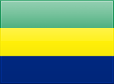 |
| History | |
| Following, independence from France in 1960, El Hadj Omar BONGO Ondimba - one of the longest-ruling heads of state in the world - dominated the country's political scene for four decades (1967-2009). President BONGO introduced a nominal multiparty system and a new constitution in the early 1990s. However, allegations of electoral fraud during local elections in December 2002 and the presidential election in 2005 exposed the weaknesses of formal political structures in Gabon. Following President BONGO's death in 2009, a new election brought his son, Ali BONGO Ondimba, to power. Despite constrained political conditions, Gabon's small population, abundant natural resources, and considerable foreign support have helped make it one of the more stable African countries. President Ali BONGO Ondimba’s controversial August 2016 reelection sparked unprecedented opposition protests that resulted in the burning of the parliament building. The election was contested by the opposition after fraudulent results were flagged by international election observers. Gabon’s Constitutional Court reviewed the election results but ruled in favor of President BONGO, upholding his win and extending his mandate to 2023. |

|  |
| |
| Geography | |
| |
| Location: | Central Africa, bordering the Atlantic Ocean at the Equator, between Republic of the Congo and Equatorial Guinea |
| Geographic coordinates: | 1 00 S, 11 45 E |
| Area: | total: 267,667 sq km land: 257,667 sq km water: 10,000 sq km Size comparison: slightly smaller than Colorado |
| Land Boundaries: | total: 3,261 km border countries (3): Cameroon 349 km, Republic of the Congo 2567 km, Equatorial Guinea 345 km |
| Coastline: | 885 km |
| Maritime claims: | territorial sea: 12 nm exclusive economic zone: 200 nm contiguous zone: 24 nm |
| Climate: | tropical; always hot, humid |
| Terrain: | narrow coastal plain; hilly interior; savanna in east and south |
| Natural resources: | petroleum, natural gas, diamond, niobium, manganese, uranium, gold, timber, iron ore, hydropower |
| Land use: | agricultural land: 19% (2011 est.) arable land: 1.2% (2011 est.) permanent crops: 0.6% (2011 est.) permanent pasture: 17.2% (2011 est.) forest: 81% (2011 est.) other: 0% (2011 est.) |
| Irrigated land: | 40 sq km (2012) |
| Natural hazards: | none |
| Current Environment Issues: | deforestation (the forests that cover three-quarters of the country are threatened by excessive logging); burgeoning population exacerbating disposal of solid waste; oil industry contributing to water pollution; wildlife poaching |
| International Environment Agreements: | party to: Biodiversity, Climate Change, Climate Change-Kyoto Protocol, Desertification, Endangered Species, Hazardous Wastes, Law of the Sea, Marine Dumping, Ozone Layer Protection, Ship Pollution, Tropical Timber 83, Tropical Timber 94, Wetlands, Whaling signed, but not ratified: none of the selected agreements |
| ^Back to Top | |
| People | |
| |
| Nationality: | noun: Gabonese (singular and plural) adjective: Gabonese |
| Ethnic groups: | Gabonese-born 80.1% (includes Fang 23.2%, Shira-Punu/Vili 18.9%, Nzabi-Duma 11.3%, Mbede-Teke 6.9%, Myene 5%, Kota-Kele 4.9%, Okande-Tsogo 2.1%, Pygmy .3%, other 7.5%), Cameroonian 4.6%, Malian 2.4%, Beninese 2.1%, acquired Gabonese nationality 1.6%, Togolese 1.6%, Senegalese 1.1%, Congolese (Brazzaville) 1%, other 5.5% (includes Congolese (Kinshasa), Equatorial Guinean, Nigerian) (2012) |
| Languages: | French (official), Fang, Myene, Nzebi, Bapounou/Eschira, Bandjabi |
| Religions: | Roman Catholic 42.3%, Protestant 12.3%, other Christian 27.4%, Muslim 9.8%, animist 0.6%, other 0.5%, none/no answer 7.1% (2012 est.) |
| Population: | 2,119,036 (July 2018 est.) note: estimates for this country explicitly take into account the effects of excess mortality due to AIDS; this can result in lower life expectancy, higher infant mortality, higher death rates, lower population growth rates, and changes in the distribution of population by age and sex than would otherwise be expected |
| Age structure: | 0-14 years: 37.45% (male 405,676 /female 387,900) 15-24 years: 22.08% (male 245,490 /female 222,343) 25-54 years: 31.6% (male 355,348 /female 314,344) 55-64 years: 4.96% (male 54,679 /female 50,356) 65 years and over: 3.91% (male 40,721 /female 42,179) (2018 est.) |
| Dependency ratios: | total dependency ratio: 67.4 (2015 est.) youth dependency ratio: 59.9 (2015 est.) elderly dependency ratio: 7.6 (2015 est.) potential support ratio: 13.2 (2015 est.) |
| Median age: | total: 20.5 years male: 20.8 years female: 20.2 years (2018 est.) |
| Population growth rate: | 2.73% (2018 est.) |
| Birth rate: | 26.5 births/1,000 population (2018 est.) |
| Death rate: | 6.2 deaths/1,000 population (2018 est.) |
| Net migration rate: | 7 migrant(s)/1,000 population (2018 est.) |
| Urbanization: | urban population: 89.4% of total population (2018) rate of urbanization: 2.61% annual rate of change (2015-20 est.) |
| Major urban areas - population: | 813,000 LIBREVILLE (capital) (2018) |
| Sex ratio: | at birth: 1.03 male(s)/female 0-14 years: 1.05 male(s)/female 15-24 years: 1.1 male(s)/female 25-54 years: 1.13 male(s)/female 55-64 years: 1.09 male(s)/female 65 years and over: 0.97 male(s)/female total population: 1.08 male(s)/female (2018 est.) Mother's mean age at first birth: 20.3 years (2012 est.) note: median age at first birth among women 25-29 |
| Maternal mortality rate: | 291 deaths/100,000 live births (2015 est.) |
| Infant mortality rate: | total: 32.9 deaths/1,000 live births male: 36.4 deaths/1,000 live births female: 29.3 deaths/1,000 live births (2018 est.) |
| Life expectancy at birth: | total population: 68 years male: 66.3 years female: 69.6 years (2018 est.) |
| Total fertility rate: | 3.52 children born/woman (2018 est.) |
| Contraceptive prevalence rate: | 31.1% (2012) |
| Physicians density: | 0.36 physicians/1,000 population (2016) |
| Hospital bed density: | 6.3 beds/1,000 population (2010) |
| Drinking water source: | improved: urban: 97.2% of population rural: 66.7% of population total: 93.2% of population unimproved: urban: 2.8% of population rural: 33.3% of population total: 6.8% of population (2015 est.) |
| Sanitation facility access: | improved: urban: 43.4% of population (2015 est.) rural: 31.5% of population (2015 est.) total: 41.9% of population (2015 est.) unimproved: urban: 56.6% of population (2015 est.) rural: 68.5% of population (2015 est.) total: 58.1% of population (2015 est.) |
| HIV/AIDS - adult prevalence rate: | 4.2% (2017 est.) |
| HIV/AIDS - people living with HIV/AIDS: | 56,000 (2017 est.) |
| HIV/AIDS - deaths: | 1,300 (2017 est.) |
| Obesity - adult prevalence rate: | 15% (2016) |
| Children under the age of 5 years underweight: | 6.4% (2012) |
| Education expenditures: | 2.7% of GDP (2014) |
| Literacy: | definition: age 15 and over can read and write (2015 est.) total population: 83.2% male: 85.3% female: 81% (2015 est.) Unemployment, youth ages 15-24: total: 35.7% male: 30.5% female: 41.9% (2010 est.) |
| ^Back to Top | |
| Government | |
| |
| Country name: | conventional long form: Gabonese Republic conventional short form: Gabon local long form: Republique Gabonaise local short form: Gabon etymology: name originates from the Portuguese word "gabao" meaning "cloak," which is roughly the shape that the early explorers gave to the estuary of the Komo River by the capital of Libreville |
| Government type: | presidential republic |
| Capital: | name: Libreville geographic coordinates: 0 23 N, 9 27 E time difference: UTC+1 (6 hours ahead of Washington, DC, during Standard Time) etymology: original site settled by freed slaves and the name means "free town" in French; named in imitation of Freetown, the capital of Sierra Leone |
| Administrative divisions: | 9 provinces; Estuaire, Haut-Ogooue, Moyen-Ogooue, Ngounie, Nyanga, Ogooue-Ivindo, Ogooue-Lolo, Ogooue-Maritime, Woleu-Ntem |
| Independence: | 17 August 1960 (from France) |
| National holiday: | Independence Day, 17 August (1960) |
| Constitution: | history: previous 1961; latest drafted May 1990, adopted 15 March 1991, promulgated 26 March 1991 amendments: proposed by the president of the republic, by the Council of Ministers, or by one-third of either house of Parliament; passage requires Constitutional Court evaluation, at least two-thirds majority vote of two-thirds of the Parliament membership convened in joint session, and approval in a referendum; constitutional articles on Gabon’s democratic form of government cannot be amended; amended several times, last in 2011 (2017) |
| Legal system: | mixed legal system of French civil law and customary law |
| Suffrage: | 18 years of age; universal |
| Executive branch: | chief of state: President Ali BONGO Ondimba (since 16 October 2009) head of government: Prime Minister Julien NKOGHE BEKALE (since 15 January 2019) cabinet: Council of Ministers appointed by the prime minister in consultation with the president elections/appointments: president directly elected by simple majority popular vote for a 7-year term (no term limits); election last held on 27 August 2016 (next to be held in August 2023); prime minister appointed by the president election results: Ali BONGO Ondimba reelected president; percent of vote - Ali BONGO Ondimba (PDG) 49.8%, Jean PING (UFC) 48.2%, other 2.0% |
| Legislative branch: | description: bicameral Parliament or Parlement consists of: Senate or Senat (102 seats; members indirectly elected by municipal councils and departmental assemblies by absolute majority vote in 2 rounds if needed; members serve 6-year terms) National Assembly or Assemblee Nationale (143 seats; members elected in single-seat constituencies by absolute majority vote in 2 rounds if needed; members serve 5-year terms) elections: Senate - last held on 13 December 2014 (next to be held in January 2020) National Assembly - held in 2 rounds on 6 and 27 October 2018 (next to be held in 2023) election results: Senate - percent of vote by party - NA; seats by party - PDG 81, CLR 7, PSD 2, ADERE-UPG 1, UPG 1, PGCI 1, independent 7; composition - men 84, women 18, percent of women 17.6% National Assembly - percent of vote by party - NA; seats by party - PDG 98, The Democrats or LD 11, RV 8, Social Democrats of Gabon 5, RH&M 4, other 9, independent 8; composition - men 123, women 20, percent of women 14%; note - total Parliament percent of women 15.5% |
| Judicial branch: | highest courts: Supreme Court (consists of 4 permanent specialized supreme courts - Supreme Court or Cour de Cassation, Administrative Supreme Court or Conseil d'Etat, Accounting Supreme Court or Cour des Comptes, Constitutional Court or Cour Constitutionnelle, and the non-permanent Court of State Security, initiated only for cases of high treason by the president and criminal activity by executive branch officials) judge selection and term of office: appointment and tenure of Supreme, Administrative, Accounting, and State Security courts NA; Constitutional Court judges appointed - 3 by the national president, 3 by the president of the Senate, and 3 by the president of the National Assembly; judges serve single renewable 7-year terms subordinate courts: Courts of Appeal; county courts; military courts |
| Political parties and leaders: | Circle of Liberal Reformers or CLR [Gen. Jean-Boniface ASSELE] Democratic and Republican Alliance or ADERE [DIDJOB Divungui di Ndinge] Gabonese Democratic Party or PDG [Ali BONGO Ondimba] Independent Center Party of Gabon or PGCI [Luccheri GAHILA] Legacy and Modernity Party or RH&M Rally for Gabon or RPG Restoration of Republican Values or RV Social Democratic Party or PSD [Pierre Claver MAGANGA-MOUSSAVOU] Social Democrats of Gabon The Democrats or LD Union for the New Republic or UPRN [Louis Gaston MAYILA] Union of Gabonese People or UPG [Richard MOULOMBA] Union of Forces for Change or UFC [Jean PING] |
| International organization participation: | ACP, AfDB, AU, BDEAC, CEMAC, FAO, FZ, G-24, G-77, IAEA, IBRD, ICAO, ICCt, ICRM, IDA, IDB, IFAD, IFC, IFRCS, ILO, IMF, IMO, IMSO, Interpol, IOC, IOM, IPU, ISO, ITSO, ITU, ITUC (NGOs), MIGA, NAM, OIC, OIF, OPCW, UN, UNCTAD, UNESCO, UNIDO, UNWTO, UPU, WCO, WHO, WIPO, WMO, WTO |
| National symbol(s): | black panther; national colors: green, yellow, blue |
| National anthem: | name: "La Concorde" (The Concorde) lyrics/music: Georges Aleka DAMAS note: adopted 1960 |
| Diplomatic representation in the US: | chief of mission: Ambassador Michael MOUSSA-ADAMO (since September 9, 2011) chancery: 2034 20th Street NW, Suite 200, Washington, DC 20009 telephone: [1] (202) 797-1000 FAX: [1] (301) 332-0668 |
| Diplomatic representation from the US: | chief of mission: Ambassador Joel DANIES (since 22 MARCH 2018); note - also accredited to Sao Tome and Principe embassy: Sabliere, B.P. 4000, Libreville mailing address: Centre Ville, B. P. 4000, Libreville; pouch: 2270 Libreville Place, Washington, DC 20521-2270 telephone: [241] 01-45-71-00 FAX: [241] 01-74-55-07 |
| ^Back to Top | |
| Economy | |
Gabon enjoys a per capita income four times that of most sub-Saharan African nations, but because of high income inequality, a large proportion of the population remains poor. Gabon relied on timber and manganese exports until oil was discovered offshore in the early 1970s. From 2010 to 2016, oil accounted for approximately 80% of Gabon’s exports, 45% of its GDP, and 60% of its state budget revenues. Gabon faces fluctuating international prices for its oil, timber, and manganese exports. A rebound of oil prices from 2001 to 2013 helped growth, but declining production, as some fields passed their peak production, has hampered Gabon from fully realizing potential gains. GDP grew nearly 6% per year over the 2010-14 period, but slowed significantly from 2014 to just 1% in 2017 as oil prices declined. Low oil prices also weakened government revenue and negatively affected the trade and current account balances. In the wake of lower revenue, Gabon signed a 3-year agreement with the IMF in June 2017. Despite an abundance of natural wealth, poor fiscal management and over-reliance on oil has stifled the economy. Power cuts and water shortages are frequent. Gabon is reliant on imports and the government heavily subsidizes commodities, including food, but will be hard pressed to tamp down public frustration with unemployment and corruption. | |
| GDP (purchasing power parity): | $36.66 billion (2017 est.) $36.5 billion (2016 est.) $35.75 billion (2015 est.) note: data are in 2017 dollars |
| GDP (official exchange rate): | $14.93 billion (2017 est.) |
| GDP - real growth rate: | 0.5% (2017 est.) 2.1% (2016 est.) 3.9% (2015 est.) |
| GDP - per capita (PPP): | $18,100 (2017 est.) $18,400 (2016 est.) $18,500 (2015 est.) note: data are in 2017 dollars |
| Gross national saving: | 25.6% of GDP (2017 est.) 24.3% of GDP (2016 est.) 29.2% of GDP (2015 est.) GDP - composition, by end use: household consumption: 37.6% (2017 est.) government consumption: 14.1% (2017 est.) investment in fixed capital: 29% (2017 est.) investment in inventories: -0.6% (2016 est.) exports of goods and services: 46.7% (2017 est.) imports of goods and services: -26.8% (2017 est.) GDP - composition, by sector of origin: agriculture: 5% (2017 est.) industry: 44.7% (2017 est.) services: 50.4% (2017 est.) |
| Agriculture - products: | cocoa, coffee, sugar, palm oil, rubber; cattle; okoume (a tropical softwood); fish |
| Industries: | petroleum extraction and refining; manganese, gold; chemicals, ship repair, food and beverages, textiles, lumbering and plywood, cement |
| Industrial production growth rate: | 1.8% (2017 est.) |
| Labor force: | 557,800 (2017 est.) |
| Labor force - by occupation: | agriculture: 64% industry: 12% services: 24% (2005 est.) |
| Unemployment rate: | 28% (2015 est.) 20.4% (2014 est.) |
| Population below poverty line: | 34.3% (2015 est.) |
| Household income or consumption by percentage share: | lowest 10%: 2.5% highest 10%: 32.7% (2005) |
| Distribution of family income - Gini index: | 42.2 (2005 est.) |
| Budget: | revenues: 2.634 billion (2017 est.) expenditures: 2.914 billion (2017 est.) |
| Taxes and other revenues: | 17.6% (of GDP) (2017 est.) Budget surplus (+) or deficit (-): -1.9% (of GDP) (2017 est.) |
| Public debt: | 62.7% of GDP (2017 est.) 64.2% of GDP (2016 est.) |
| Fiscal year: | calendar year |
| Inflation rate (consumer prices): | 2.7% (2017 est.) 2.1% (2016 est.) |
| Current account balance: | -$725 million (2017 est.) -$1.389 billion (2016 est.) |
| Exports: | $5.564 billion (2017 est.) $4.364 billion (2016 est.) |
| Exports - commodities: | crude oil, timber, manganese, uranium |
| Exports - partners: | China 36.4%, US 10%, Ireland 8.5%, Netherlands 6.3%, South Korea 5.1%, Australia 5%, Italy 4.6% (2017) |
| Imports: | $2.829 billion (2017 est.) $2.652 billion (2016 est.) |
| Imports - commodities: | machinery and equipment, foodstuffs, chemicals, construction materials |
| Imports - partners: | France 23.6%, Belgium 19.6%, China 15.2% (2017) |
| Reserves of foreign exchange and gold: | $981.6 million (31 December 2017 est.) $804.1 million (31 December 2016 est.) |
| Debt - external: | $6.49 billion (31 December 2017 est.) $5.321 billion (31 December 2016 est.) |
| Market value of publicly traded shares: | n/a |
| Exchange rates: | Cooperation Financiere en Afrique Centrale francs (XAF) per US dollar - 605.3 (2017 est.) 593.01 (2016 est.) 593.01 (2015 est.) 591.45 (2014 est.) 494.42 (2013 est.) |
| ^Back to Top | |
| Energy | |
| |
| Electricity - production: | 2.244 billion kWh (2016 est.) |
| Electricity - consumption: | 2.071 billion kWh (2016 est.) |
| Electricity - exports: | 0 kWh (2016 est.) |
| Electricity - imports: | 344 million kWh (2016 est.) |
| Electricity - installed generating capacity: | 671,000 kW (2016 est.) |
| Electricity - from fossil fuels: | 51% of total installed capacity (2016 est.) |
| Electricity - from nuclear fuels: | 0% of total installed capacity (2017 est.) |
| Electricity - from hydroelectric plants: | 49% of total installed capacity (2017 est.) |
| Electricity - from other renewable sources: | 0% of total installed capacity (2017 est.) |
| Crude oil - production: | 198,800 bbl/day (2017 est.) |
| Crude oil - exports: | 214,200 bbl/day (2017 est.) |
| Crude oil - imports: | 0 bbl/day (2015 est.) |
| Crude oil - proved reserves: | 2 billion bbl (1 January 2018 est.) |
| Refined petroleum products - production: | 16,580 bbl/day (2017 est.) |
| Refined petroleum products - consumption: | 24,000 bbl/day (2016 est.) |
| Refined petroleum products - exports: | 4,662 bbl/day (2015 est.) |
| Refined petroleum products - imports: | 10,680 bbl/day (2015 est.) |
| Natural gas - production: | 401 million cu m (2017 est.) |
| Natural gas - consumption: | 401 million cu m (2017 est.) |
| Natural gas - exports: | 0 cu m (2017 est.) |
| Natural gas - imports: | 0 cu m (2017 est.) |
| Natural gas - proved reserves: | 28.32 billion cu m (1 January 2018 est.) |
| Carbon dioxide emissions from consumption of energy: | 4.293 million Mt (2017 est.) |
| ^Back to Top | |
| Communications | |
| |
| Cellular Phones in use: | total subscriptions: 2,663,243 subscriptions per 100 inhabitants: 150 (2017 est.) |
| Telephone system: | general assessment: adequate system of cable, microwave radio relay, tropospheric scatter, radiotelephone communication stations, and a domestic satellite system with 12 earth stations; competition among telecoms, independent regulatory authority and reduction in cost connecting makes for strong telecommunications (2018) domestic: fiixed-line is 1 per 100 subscriptions; a growing mobile cellular network with multiple providers is making telephone service more widely available with mobile cellular teledensity at 150 per 100 persons (2018) international: country code - 241; landing point for the SAT-3/WASC fiber-optic submarine cable that provides connectivity to Europe and Asia; satellite earth stations - 3 Intelsat (Atlantic Ocean); sufficient international bandwidth on the SAT-3/WASC/SAFE submarine cable and ACE submarine cable; Airtel Gabon opened submarine link between Libreville and Port-Gentil (2017) |
| Broadcast media: | state owns and operates 2 TV stations and 2 radio broadcast stations; a few private radio and TV stations; transmissions of at least 2 international broadcasters are accessible; satellite service subscriptions are available |
| Internet country code: | .ga |
| Internet users: | total: 835,408 percent of population: 48.1% (July 2016 est.) |
| ^Back to Top | |
| Transportation | |
| |
| Airports: | 44 (2013) |
| Airports (paved runways): | total 14 (2017) over 3,047 m: 1 (2017) 2,438 to 3,047 m: 2 (2017) 1,524 to 2,437 m: 9 (2017) 914 to 1,523 m: 1 (2017) under 914 m: 1 (2017) |
| Airports (unpaved runways): | total 30 (2013) 1,524 to 2,437 m: 7 (2013) 914 to 1,523 m: 9 (2013) under 914 m: 14 (2013) |
| Pipelines: | 807 km gas, 1639 km oil, 3 km water (2013) |
| Railways: | total 649 km (2014) standard gauge: 649 km 1.435-m gauge (2014) |
| Roadways: | total 14,300 km (2001) paved: 900 km (2001) unpaved: 13,400 km (2001) |
| Waterways: | 1,600 km (310 km on Ogooue River) (2010) |
| Merchant marine: | total 29 by type: general cargo 11, oil tanker 1, other 17 (2018) |
| Ports and terminals: | major seaport(s): Libreville, Owendo, Port-Gentil oil terminal(s): Gamba, Lucina |
| ^Back to Top | |
| Military | |
| |
| Military branches: | Gabonese Defense Forces (Forces de Defense Gabonaise): Land Force (Force Terrestre), Gabonese Navy (Marine Gabonaise), Gabonese Air Forces (Forces Aerienne Gabonaises, FAG) (2012) |
| Military service age and obligation: | 20 years of age for voluntary military service; no conscription (2012) |
| Military expenditures: | 1.43% of GDP (2016) 1.19% of GDP (2015) 1.14% of GDP (2014) 1.6% of GDP (2013) 1.62% of GDP (2012) |
| ^Back to Top | |
| Transnational Issues | |
| |
| Disputes - International: | UN urges Equatorial Guinea and Gabon to resolve the sovereignty dispute over Gabon-occupied Mbane Island and lesser islands and to establish a maritime boundary in hydrocarbon-rich Corisco Bay |
| ^Back to Top | |
Back to Flag Counter Overview
Source: CIA - The World Factbook